


Cholesteatoma: Symptoms, Risks, and Treatment Options
Cholesteatoma: Symptoms, Risks, and Treatment Options
15 min
Published November 20, 2025
If left untreated, Cholesteatoma can cause serious complications in the middle ear.
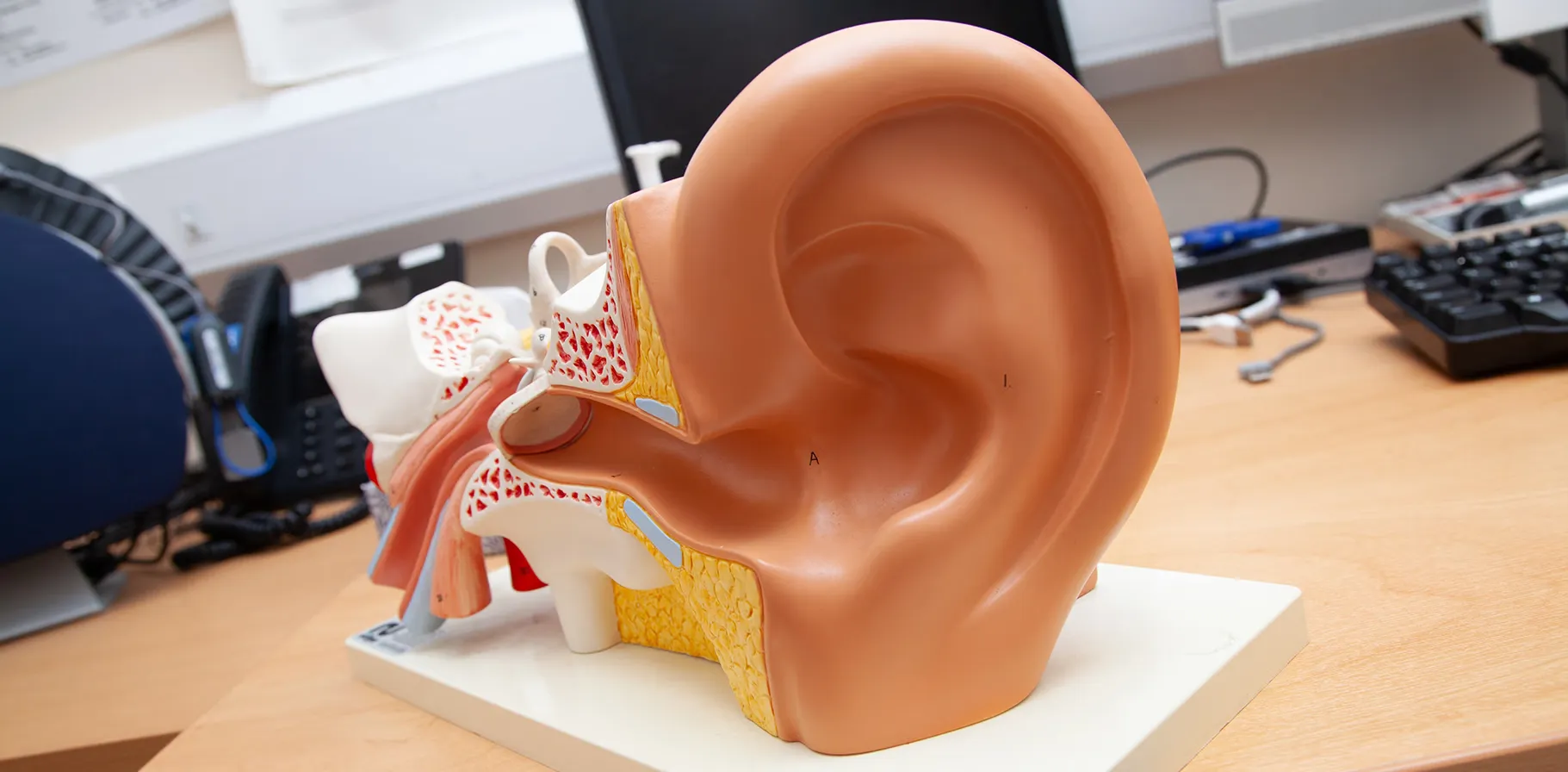
Cholesteatoma is a condition that affects the ear, specifically the middle ear, behind the eardrum. It is not a tumor, but a growth of skin cells, or a cyst, that usually occurs when there is a problem with the ear. Cholesteatomas can lead to serious complications if not treated, which makes it an important concern in the field of otorhinolaryngology, the medical specialty that focuses on the health of the ear, nose and throat.
Prevalence & Risk of Cholesteatoma
The prevalence of cholesteatoma varies according to the region and the population.
It is usually more common in young children, but it can also affect adults. According to studies, cholesteatomas appear in about 5 to 15 cases per 100,000 people each year¹.
It has been observed that people descendent from the Philippines and Africa have higher rates of the condition, indicating that demographics also affects the prevalence³.
What Are the Early Signs of Cholesteatoma?
Many individuals may not recognize the signs of cholesteatoma until they cause significant damage, which emphasizes the need for education in their symptoms and risk factors. Awareness of cholesteatoma is crucial for early detection and management.
Common initial signs include:
Understanding these early warning signs can allow individuals and their families to seek medical help earlier, leading to better treatment results. Understanding the causes can help health professionals focus on prevention and early detection strategies. Regular checks with an ear specialist, especially for children with a history of ear infections can lead to an earlier diagnosis and treatment of cholesteatoma.
The Consequences of Untreated Cholesteatoma
Since cholesteatoma is a condition that affects the middle ear, it can lead to serious health problems if not treated. Given the potential complications of untreated cholesteatoma, it is essential that patients and health professionals have a deep knowledge of cholesteatoma.
Such consequences include:
- chronic ear infections
- hearing loss
- balance problems and
- even life-threatening conditions such as meningitis (when the infection spreads to the brain).
Awareness not only leads to a better prognosis, but also promotes proactive approaches in managing this condition, helping to reduce its impact on affected individuals and their families.
Despite these notable signs, studies have shown that many people do not seek medical attention immediately. For example, Morita et al. (2018) found that the first signs of cholesteatoma are often overlooked. People can rule out their symptoms, thinking that they are minor or temporary, which leads to diagnosis and treatment delays. This delay can cause the worsening of the disease, which makes the treatment more complicated, and the prognosis is less favorable⁶.
The need for surveillance between patients and medical care providers is critical. When people recognize their symptoms and understand their potential importance, they are more likely to seek medical attention.
Medical care providers also play a vital role. They must be aware of the early signs of cholesteatoma and encourage patients to discuss any ear-related concerns. This proactive approach can lead to an earlier diagnosis and improve the results for those affected.

Ultimately, awareness is essential. By educating people about the symptoms of cholesteatoma and addressing social barriers for access to medical care, we can help ensure that people receive timely care for their ear problems. This effort can greatly reduce the risk of complications that arise from unrelated cases, such as permanent auditory loss or even more serious health concerns. Being aware of the symptoms and understanding their implications can save lives and improve the health of many people.
How to Treat Cholesteatoma?
Cholesteatoma treatment options usually involve surgical intervention to remove the growth and repair the damage caused. Surgery may be necessary to avoid additional complications such as hearing loss, infections and potential spread of the disease to the nearby structures, such as the brain. Statistics indicate that although surgery is successful, up to 10 to 20% of patients may suffer cholesteatoma recurrence after treatment⁵,⁶.
A comprehensive review by Popscu et al. (2024) highlights the importance of imaging in the diagnosis of cholesteatoma. Advanced imaging techniques, such as magnetic resonance imaging (MRI) and computed tomography (CT scan), help doctors see the extent of cholesteatoma to plan the best surgical approach. These technologies have made it possible to detect cholesteatoma earlier and more accurately, which can lead to better surgical results. The review emphasizes that understanding how to interpret these images is crucial to surgeons, as they guide them in making informed decisions during the procedure².
Different surgical techniques can be used, and the choice usually depends on the size, location and severity of cholesteatoma, as well as the patient's individual needs. Surgical interventions for cholesteatoma usually include:
- Tympanomastoidectomy surgery, which involves removing the cholesteatoma sac and any infected tissue. This surgery can be performed using different methods, such as the open technique, where the ears are fully exposed or the closed technique, where the ear canal is left intact.
Reardon et al. (2022) emphasized the importance of customizing the approach based on individual needs, as each case of cholesteatoma may have unique challenges. Some people may require more complex surgeries if the cholesteatoma causes extensive damage or if it is located in a difficult area⁵.
- Tympanoplasty: Another important aspect of cholesteatoma surgery is the potential need for reconstruction after tissue removal. This may involve a skin graft of the eardrum or the reconstruction of the small bones in the middle ear (the ossicles), which are essential for hearing.
The choice of reconstruction technique depends on factors such as the individual's age, the condition of their hearing and the overall health of the ear. A personalized approach ensures that each patient receives the most appropriate plan to achieve ideal hearing results and reduce the chances of recurrence².
Studies show that surgical treatment of cholesteatoma can significantly improve the symptoms and quality of life of patients and avoid more serious health problems. They also underline the link between early surgical treatment and the best long-term results, noting that patients undergoing surgery sooner have higher success rates and fewer complications⁵. That being said, it is crucial to understand that cholesteatoma can return after treatment. Regular follow-up visits are required to monitor any signs of recurrence. Doctors usually recommend these visits for at least five years after surgery.
Overall, cholesteatoma treatment involves a careful and personalized approach, combining advanced imaging techniques and surgical methods adapted to each individual's exclusive needs. As research continues to advance in this field, patients can expect more effective treatments and improved results.
Summary
Cholesteatoma is not just a complicated ear condition; It carries serious risks if not treated. As mentioned, a significant complication of untreated cholesteatoma is hearing loss. Individuals with this condition may suffer a gradual loss of hearing due to the accumulation of skin cells and other debris in the middle ear. The structure of the ear is affected over time, making it difficult for sound waves through the ear. Statistics show that about 25% of people with untreated cholesteatoma will suffer significant hearing loss over time. This can lead to challenges in daily communication and activities⁴.
In addition to hearing loss, recurring infections are a common problem. Fluid accumulation in the middle ear creates an appropriate environment for bacteria growth. Patients usually face repeated ear infections, which may result in pain and damage to the ear structures. Chronic infections can lead to a treatment and recovery cycle that overloads patients physically and emotionally.
More serious health issues may arise from untreated cholesteatoma, including a rare but severe condition: intracranial complications. These complications occur when the infection spreads beyond the middle ear to the brain or surrounding areas, potentially causing meningitis or brain abscesses. A study by Kuo et al. (2015) pointed out that the risk of these serious health problems increases when cholesteatoma is left unmanaged, emphasizing the importance of addressing the issue early⁷.
Despite the known complications, standardized assessments in cholesteatoma care are still lacking. Tije (2022) emphasizes the need for health professionals to follow specific protocols when diagnosing and treating cholesteatoma. In doing so, doctors can ensure that patients receive consistent and effective care. Standardized evaluations can help improve treatment results, minimize complications and allow better recovery tracking⁸.
Overall, complications associated with untreated cholesteatoma highlight the importance of early detection and immediate treatment. In many cases, if cholesteatoma is identified early and treated appropriately, the risk of hearing loss, recurring infections and serious health problems may be significantly reduced. Ongoing research is also necessary to better understand the disease and optimize patient care. With advances in treatment protocols and early intervention strategies, many patients can live a healthier life without the serious repercussions that untreated cholesteatoma can bring.
If you are struggling with any of the symptoms above, we recommend visiting your doctor for assessment and management.
References
¹ Bonnard, Å., Berglin, C. E., Wincent, J., Eriksson, P. O., Westman, E., Feychting, M., & Mogensen, H. (2023). The risk of cholesteatoma in individuals with first-degree relatives surgically treated for the disease. JAMA Otolaryngology–Head & Neck Surgery, 149(5), 390-396. https://jamanetwork.com/journals/jamaotolaryngology/article-abstract/2802180
² Popescu, C., Văruț, R. M., Puticiu, M., Belghiru, V. I., Banicioiu, M., Rotaru, L. T., ... & Popescu, A. I. S. (2024). Comprehensive management of cholesteatoma in otitis media: Diagnostic challenges, imaging advances, and surgical outcome. Journal of Clinical Medicine, 13(22), 6791. https://www.mdpi.com/2077-0383/13/22/6791
³ Patel, M. S., Candelo, E., Hochwald, A., & Raymond, M. (2025). The Relationship Between Social Determinants of Health and Cholesteatoma Care. Otology & Neurotology Open, 5(2), e069. https://journals.lww.com/onojournal/fulltext/2025/06000/the_relationship_between_social_determinants_of.2.aspx
⁴ Lee, J. A., Fuller, S. R., Nguyen, S. A., & Meyer, T. A. (2020). Factors affecting complications and comorbidities in children with cholesteatoma. International Journal of Pediatric Otorhinolaryngology, 135, 110080. https://www.sciencedirect.com/science/article/pii/S0165587620302238
⁵ Reardon, T., Turnow, M., Elston, S., Brown, N. J., Koller, G. M., Sharma, S., ... & Fraser, J. F. (2022). Surgical management of petrous apex cholesteatomas in the pediatric population: A systematic review. Surgical Neurology International, 13, 494. https://pmc.ncbi.nlm.nih.gov/articles/PMC9699891/
⁶ Morita, S., Nakamaru, Y., Fukuda, A., Fujiwara, K., Hoshino, K., & Homma, A. (2018). Clinical characteristics and treatment outcomes for patients with external auditory canal cholesteatoma. Otology & Neurotology, 39(2), 189-195. https://journals.lww.com/otology-neurotology/fulltext/2018/02000/clinical_characteristics_and_treatment_outcomes.15.aspx
⁷ Kuo, C. L., Shiao, A. S., Yung, M., Sakagami, M., Sudhoff, H., Wang, C. H., ... & Lien, C. F. (2015). Updates and knowledge gaps in cholesteatoma research. BioMed research international, 2015(1), 854024. https://onlinelibrary.wiley.com/doi/abs/10.1155/2015/854024
⁸ ten Tije, F. A. (2022). Towards uniform evaluation of cholesteatoma care. https://research.vu.nl/en/publications/towards-uniform-evaluation-of-cholesteatoma-care
