



Ear Canal Anatomy, Functions, Pain Causes & Infections
Ear Canal Anatomy, Functions, Pain Causes & Infections
10 min
Published December 12, 2025
The anatomy of the ear canal is important to the way we hear – what factors may affect it?
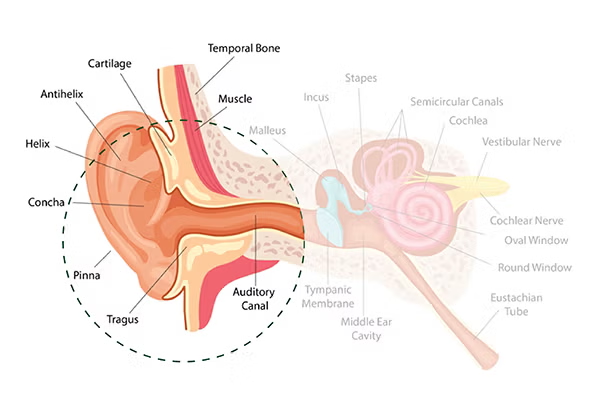
The ear canal, also called the external auditory meatus (EAM), is a structure similar to a tube that is shaped like an "S". It extends from the outer ear or pinna (the part of the ear that is visible) to the eardrum, which is also known as the tympanic membrane. This channel is not just a straight tunnel; Instead, it bends in a way that helps direct sound waves to the eardrum, and in total ,it is approximately 2.5 cm long in adults.
What are the Parts of the Ear Canal?
What is the Function of the Ear Canal?
Together, the bone and cartilage help the ear canal to do its job of guiding sound waves, providing a way for sounds to reach the eardrum and make it vibrate. This vibration is the first step in the hearing process, allowing sounds to be transferred onto the middle and inner ears, and ultimately the brain, for processing, allowing us to enjoy music, conversations, or any sound in our environment.
The structure of the ear canal is also designed in a way that helps amplify certain sound frequencies. According to Gurunathan and Perry (2021), their unique form can improve our ability to listen to specific sounds better, which makes our audition even more effective¹.
In addition to transporting the sound, the ear canal has protective functions. It helps prevent harmful particles, such as dirt and small microorganisms to reach the internal parts of the ear. These protection measures are crucial, since allowing these harmful agents to penetrate could lead to infections or other problems within the ear. This is possible because of the self-cleaning nature of the ear canal.
The skin inside the ear canal has small glands that produce wax or cerumen. This wax serves many purposes: it helps to hold dust and foreign particles, preventing them from reaching the eardrum. Ear wax also has antibacterial properties that help keep the ear free of infections. It kills or hinders the growth of harmful bacteria and fungi that could enter the auditory channel. This is especially important because the auditory channel can be a warm and humid atmosphere, which is ideal for bacteria to prosper. Earwax naturally moves its way outwards along the channel, carrying debris and bacteria with it, which is a way in which your body helps maintain the health of your ears.
In general, understanding the anatomy of the ear canal is the first step in recognizing how it works in hearing and how many health problems can arise. Problems may occur in the ear canal due to its structure or conditions that affect it. For example, if the ear canal is blocked with excessive earwax or an outer ear infection, it may lead to pain or hearing impairment. By learning more about the external auditory meatus, individuals can better appreciate its role in hearing and the importance of ear health in general.
Why Do You Feel Pain in Your Ear Canal?
In addition to its physical structure, the ear canal also contains many small nerves. According to Kiyokawa et al. (2014), these nerves are important because they make the ear canal sensitive to touch and other external stimuli (2). For example, if something touches the inside of the channel, the nerves send signals to the brain, alerting us to the presence of an object. This sensitivity can help protect the ear against injury as well as signal if something is wrong, such as an infection or blockage.
Maintaining a healthy ear canal is vital to maintain good hearing and prevent painful conditions that may arise from infections or blockages. The external acoustic meatus is the channel that leads from the outside of the head to the eardrum. Several factors can cause pain in this area.
Treating Pain in the Ear Canal?
Research by Caprioli et al. (2023) underlines how an understanding of the ear canal anatomy can help doctors decide how to effectively treat infections (5). As described, the ear canal is a tube that extends from the external ear to the eardrum and has a specific structure that can influence the way infections occur. For example, the outer part of the ear canal has skin with tiny hair follicles and glands that produce earwax. This protects the ear by trapping dust and microbes, helping to prevent infections. However, if the earwax is removed too aggressively or if there is trauma to the skin in the auditory canal, it can make a person more sensitive to infections.
Infections like external otitis can cause several uncomfortable symptoms, such as itching, redness, swelling, and pain in the ear. Sometimes there can also be fluid drainage or a feeling of fullness in the ear. If it is not treated quickly, these infections can cause more serious problems, in particular the spread of infection to neighboring structures, which can affect hearing.
Health professionals often recommend good ear hygiene to prevent infections. This means keeping the ears clean but avoiding inserting objects, such as cotton swabs, in the ear canal, as this can push the earwax deeper and potentially cause injury. If someone develops symptoms of otitis externa, it is important for them to see a health care provider.
Doctors can prescribe antibiotics or antifungals depending on the type of infection and its severity. Treatments can also include topical drugs to reduce inflammation and relieve pain.
Overall, understanding common infections of the external acoustic meatus highlights the need for knowledge of ear health. Being aware of the risk factors and symptoms of otitis externa can help people take preventive measures and seek medical care in time. This awareness goes back to the anatomy and the function of the ear canal, showing how they work together to protect our ears. By taking care of our ears and knowing when to get help, we can maintain good ear health and prevent complications that could affect our hearing and our quality of life.
References
¹ Gurunathan, R. K., & Perry, M. (2021). The Ear and Associated Structures: Part II. Diseases and Injuries to the Head, Face and Neck: A Guide to Diagnosis and Management, 1511-1587. https://link.springer.com/chapter/10.1007/978-3-030-53099-0_37
² Kiyokawa, J., Yamaguchi, K., Okada, R., Maehara, T., & Akita, K. (2014). Origin, course and distribution of the nerves to the posterosuperior wall of the external acoustic meatus. Anatomical science international, 89, 238-245. https://link.springer.com/article/10.1007/s12565-014-0231-4
³ Damsaz, M., & Akhlaghipour, I. (2024). Infections of the Ear, Nose, and Throat. In Handbook of Oral and Maxillofacial Surgery and Implantology (pp. 1-26). Cham: Springer Nature Switzerland. https://link.springer.com/content/pdf/10.1007/978-3-031-36962-9_262-1.pdf
⁴ Tsilivigkos, C., Avramidis, K., Ferekidis, E., & Doupis, J. (2023). Malignant external otitis: what the diabetes specialist should know—a narrative review. Diabetes Therapy, 14(4), 629-638. https://link.springer.com/article/10.1007/s13300-023-01390-9
⁵ Caprioli, S., Tagliafico, A., Fiannacca, M., Borda, F., Picasso, R., Conforti, C., ... & Cittadini, G. (2023). Imaging assessment of deep neck spaces infections: an anatomical approach. La radiologia medica, 128(1), 81-92. https://link.springer.com/article/10.1007/s11547-022-01572-8
